
Stage n.38
Catanzaro – Tiriolo
Area
Sila Piccola
Difficulty
E
Distance
24,5 km
Travel time
7-8 hrs
Start
Catanzaro
Finish
Tiriolo
Difference in altitude
↑ 737m ↓ 442m
Accessible
All year round
Springs and fountainheads with waypoint
No
River/fiumare crossing (waypoint)
No
This stage links Catanzaro, the regional capital, with the village of Tiriolo. Both are known as the ‘cities of the two seas’ because they are situated in the centre of Calabria and on the so-called ‘Catanzaro Isthmus’, the narrowest point in Italy, between the Ionian and Tyrrhenian Seas. Along the route, the scenery takes centre stage and walkers will be able to admire – particularly on clear, crisp days – the two seas, Mount Etna and the Aeolian Islands, all in a single glance. Legend has it that in these parts, the mythical Odysseus – after being shipwrecked near the mouth of the River Amato and rescued by Nausicaa, daughter of Alcinous, King of the Phaeacians – set off from the mouth of the River Corace to return to Ithaca.

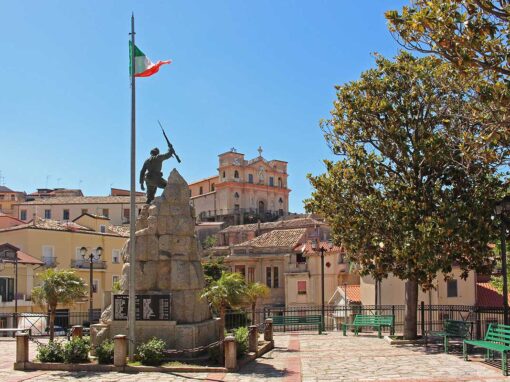
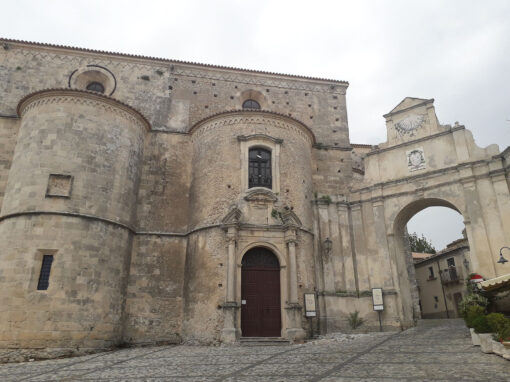
City centre of Catanzaro
This stage links Catanzaro, the regional capital, with the village of Tiriolo. Both are known as the ‘cities of the two seas’ because they are situated in the centre of Calabria and on the so-called ‘Catanzaro Isthmus’, the narrowest point in Italy, between the Ionian and Tyrrhenian Seas. Along the route, the scenery takes centre stage and walkers will be able to admire – particularly on clear, crisp days – the two seas, Mount Etna and the Aeolian Islands, all in a single glance. Legend has it that in these parts, the mythical Odysseus – after being shipwrecked near the mouth of the River Amato and rescued by Nausicaa, daughter of Alcinous, King of the Phaeacians – set off from the mouth of the River Corace to return to Ithaca.
City centre of Catanzaro
Area
Sila Piccola
Difficulty
E
Distance
24,5 km
Travel time
7-8 hrs
Start
Catanzaro
Finish
Tiriolo
Difference in altitude
↑ 737m ↓ 442m
Accessible
All year round
Springs and fountainheads with waypoint
No
River/fiumare crossing (waypoint)
No

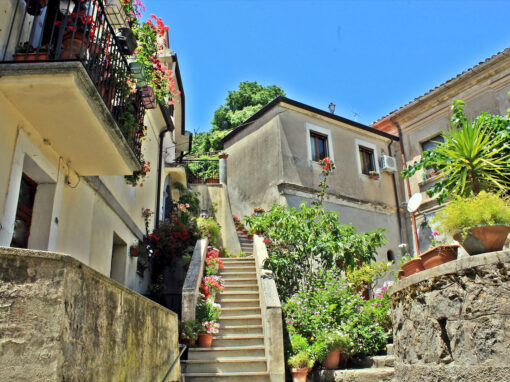
Colourful alleyways along the trail.
Route
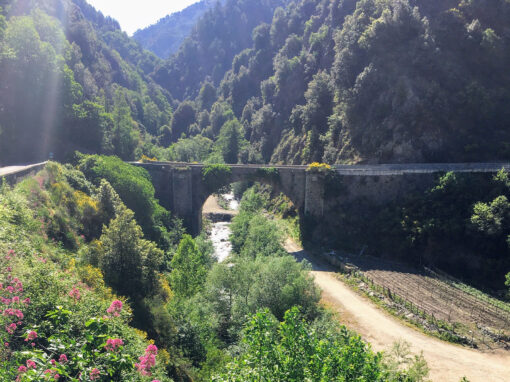
The route starts from the San Leonardo gardens in Catanzaro and continues straight on along Via Piave, then up the steps leading to Fontana Vecchia and up further steps to reach Via Alessandro Turco, until you cross the Bisantis viaduct – a single-arch reinforced concrete engineering structure from the 1960s, recognised as one of the tallest in the world. Cross the viaduct and continue straight on, passing first a petrol station, then a supermarket; at the roundabout, take the second exit onto Via Tommaso Campanella and follow it until you reach a small church dedicated to St Anthony. Continue straight on through the Catanzaro Mater Domini and Gagliano neighbourhoods. Continuing on, you pass through Cavorà di Gimigliano and Gimigliano, a town on the southern slope of the Sila Piccola overlooking the Corace river valley. After crossing the bridge over the Corace river at Gimigliano Inferiore, carry on along the ‘Ciclovia dei Parchi’ cycle route and finally reach Tiriolo, concluding the stage in its central Piazza Italia.
Brief historical overview
Catanzaro is the capital of the Calabria region, perched on three hills with splendid views of the Ionian Sea and the Sila Piccola mountains. One of engineer Morandi’s most famous engineering feats is the Bisantis Viaduct, a single-span reinforced concrete structure and one of the tallest of its kind in the world. The city’s artistic and architectural heritage is preserved in its historic churches and museums. You cannot leave the city without visiting the Mediterranean Biodiversity Park, one of Italy’s most beautiful parks, and without taking in the view from the terrace of the San Giovanni monumental complex. Don’t miss Catanzaro’s signature dish, ‘U Morzeddhu’: veal offal in tomato sauce which, once cooked, is eaten in a ‘pitta’ (a round flatbread), accompanied by a good Calabrian red wine..
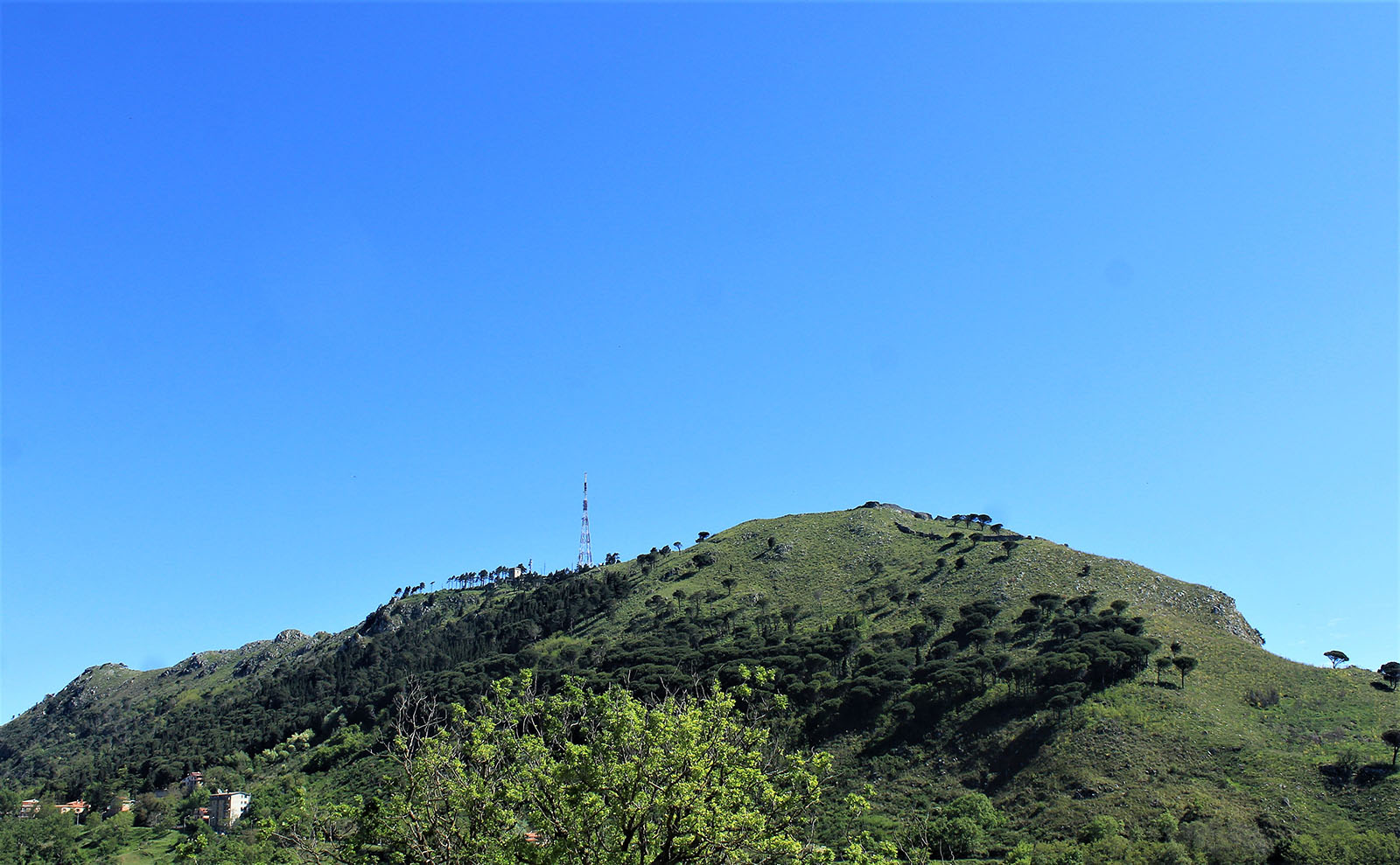
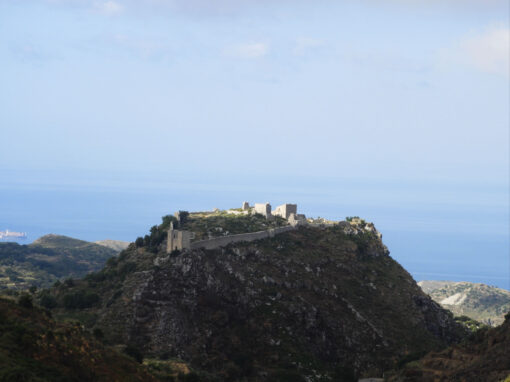
Monte Tiriolo
Gagliano, conosciuto nel dialetto locale come Gagghianu, è ritenuto il quartiere più antico di Catanzaro. Situato a nord-ovest della città, si erge su una collina panoramica e ospita chiese dal grande valore storico, tra cui la Chiesa matrice di Santa Maria Assunta e la Chiesa del Santissimo Rosario, quest’ultima risalente probabilmente al XII secolo e considerata la più antica della città. Il quartiere è attraversato da suggestivi vicoli che offrono scorci storici e arricchiti da murales artistici.

Alleyways in the centre of the village of Gagliano
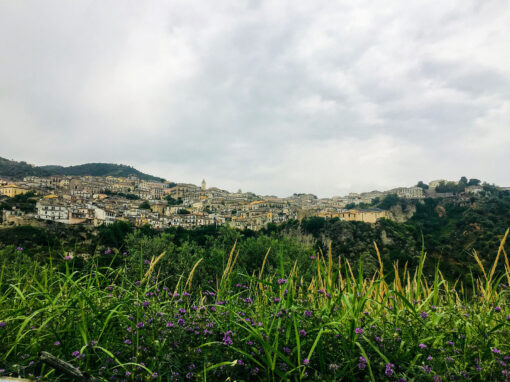
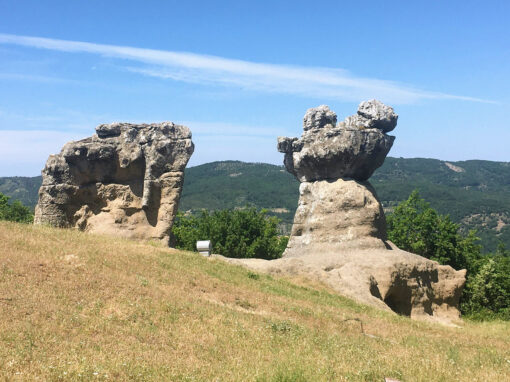
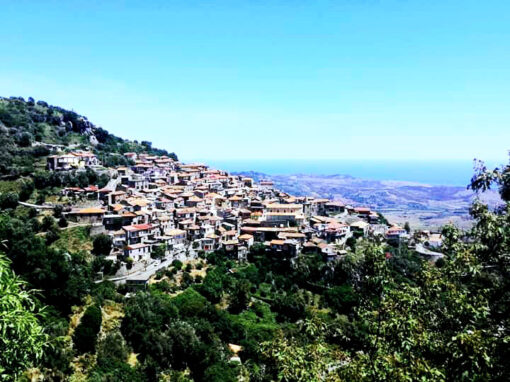
Gimigliano is a municipality situated on the southern slope of the Sila Piccola, overlooking the Corace river valley. Historically, it is divided into two main settlements: Gimigliano Superiore (Susu) and Gimigliano Inferiore (Jiusu). The town is renowned for its distinctive rocks, such as pink marble and the ‘green stone of Gimigliano’. Gimigliano is a religious centre thanks to the Sanctuary of the Madonna di Porto, patron saint of the province of Catanzaro, which attracts numerous worshippers and pilgrims every year for the celebrations held between Pentecost Sunday and the following Tuesday. In addition to the Sanctuary, there is the Church of the Rosary or St John’s, which houses works of sacred art and fine architectural features, and the Parish Church of the Holy Saviour, which holds the miraculous, non-man-made painting of the Madonna di Porto. Among the natural points of interest are: the Corace River Park; the historic quarries of geological and naturalistic significance; and, finally, the Pietra Iozzo.

Panoramic view of the village of Gimigliano
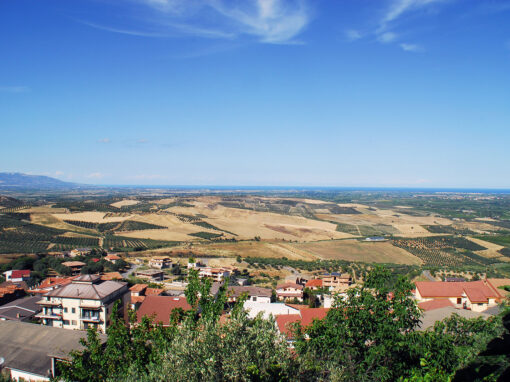
Tiriolo is a village steeped in myth, situated on the Catanzaro Isthmus – the narrowest point in Italy – from where one can enjoy views of both the Ionian and Tyrrhenian Seas.
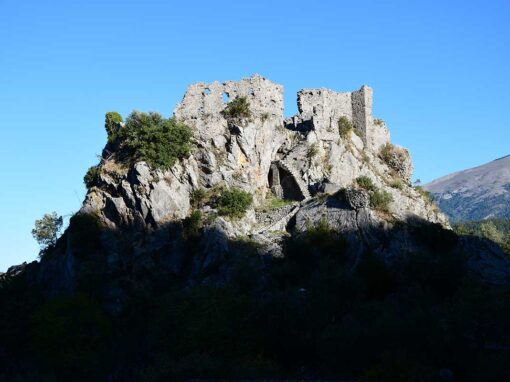
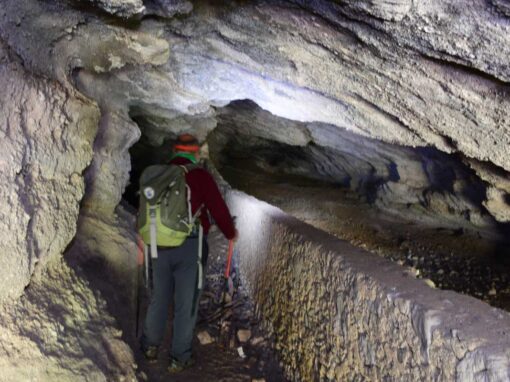
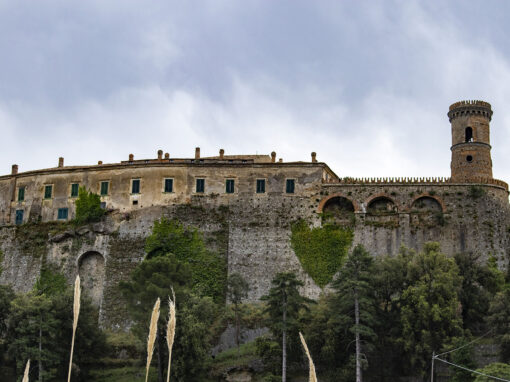
On the mountain of the same name, there are natural caves that have been inhabited since Neolithic times. Worth visiting are the beautiful palaces in the historic centre, the feudal castle, the Municipal Antiquarium (which houses an archaeological heritage of inestimable value, comprising various artefacts found in the area around the village) and the Costume Museum, featuring handcrafted garments made of pure silk. The handcrafted products range from loom-woven shawls to bobbin lace. Tiriolo is famous for the traditional costumes worn by its women, which have fascinated travellers since the 19th century. The ‘Pacchiana’ costume was a silk dress with a bodice embroidered in gold, colourful ribbons and white quilted veils, to which the women added the gold of their jewellery, the black of their plaited hair and the ‘Vancale’, a black-backed shawl featuring striking bands of bright colour.

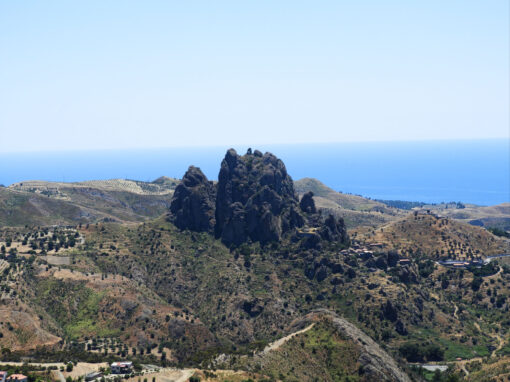
Panoramic views of Tiriolo
Map and elevation profile
Further information
Guide of reference for the stage: Marco Garcea +39 347 8051252
[Catanzaro]
For information on museums and cultural attractions- web: https://visit.catanzaro.it/
[Gimigliano]
Comune di Gimigliano – web: https://www.comune.gimigliano.cz.it/it
Pro Loco di Gimigliano – sito web: https://https://prolocogimigliano.weebly.com
[Tiriolo]
Further information Portale Tiriolo turistica – web: www.tirioloturistica.it
Comune Tiriolo – web: www.comune.tiriolo.cz.it – mail: sindaco@comune.tiriolo.cz.it
Where to sleep
[Tiriolo]
B&B – La Casa Di Ely – tel. +39 338 8278616, +39 334 3322429 – mail: info@lacasadiely.it
Residence – Residence Due Mari – tel. +39 0961 991064 – +39 338 1831485 – mail: due.mari@tin.it
With thanks to Regione Calabria for the Contribution to the project.
Last update: 2026-08-11
Continue your journey on the trail































Contact us
Why are we asking you to solve this? To make sure you are human and to avoid being swamped with spam. Thanks for helping us!
Project realised with the contribution of Regione Calabria
Project realised with the contribution of Regione Calabria